While researching the history of the Alcester branch railway at the Warwickshire County Archives, I came across an 1873 petition that captures both the town’s frustration and its determination to secure better rail connections. Addressed to the Marquess of Hertford and signed by dozens of Alcester inhabitants, the letter thanks him for his efforts to benefit the neighbourhood before respectfully urging him to use his influence – particularly with the Great Western Railway – to support the construction of the Alcester branch, for which an Act of Parliament had been obtained only four months earlier.
At the time, the town was entirely dependent on the Evesham & Redditch Railway, which was worked by the Midland Railway. The signatories complain of what they describe as an “unjust and exclusive monopoly” over both passenger and goods traffic, and point out that passenger services were so limited that the line was effectively closed for much of the day. As a result, Alcester was being denied the level of railway accommodation enjoyed by other towns – something the petitioners regarded as essential for business and everyday life.
The proposed Alcester branch, they argued, would introduce much-needed competition. It would provide another route to Birmingham and, crucially, direct railway communication with Warwick, Leamington, and London.
The list of signatories gives the petition real weight. Among them are the rector, churchwardens, surgeons, the postmaster, bank manager, schoolmaster, and a long roll of grocers, drapers, maltsters, ironmongers, tailors, innkeepers, manufacturers, and other tradespeople. It is a reminder that the absence of a direct railway connection did not affect abstract “interests”, but the everyday livelihoods of Alcester’s business community – men and women whose trade depended on reliable access to markets, suppliers, and customers.
What makes the petition particularly revealing is its reference to a competing scheme. The signatories note that another line was being projected from the East and West Junction Railway at Stratford to Broom, crossing a substantial portion of the Marquess’s estate. They stress that this Stratford-Broom line would offer no benefit to Alcester or its surrounding district and warn that it might jeopardise the construction of the Alcester railway altogether. On that basis, they respectfully urge the Marquess to withhold his support from the Stratford scheme.
Railway politics were particularly intense during this period. The idea of a branch linking Alcester with Warwick had first emerged during the construction of the Evesham & Redditch Railway, with proposals appearing as early as 1864 in the form of the Warwick Junction Railway. Like many schemes of the time, it fell victim to the economic collapse of 1866 and was quietly shelved.
It is therefore notable that proposals for a Stratford-Broom line appear in the local press before the Alcester branch was revived. Despite being promoted at a time when relations between the railway companies were ostensibly more cooperative, the Stratford-Broom scheme attracted greater local concern and closer scrutiny from both residents and railway interests. In the end, Alcester secured its Act for the branch line in 1872, while the Stratford-Broom line followed a year later – by which time the balance of local and commercial priorities had already shifted.
I have carefully transcribed the petition, including names of signatories along with their profession. This has been cross-referenced with local documents for validity.
Petition for Alcester about Railway Answ’d January 1873
To
the most noble the Marquess of Hertford
We, the undersigned Inhabitants of the Town of alcester, being deeply sensible of your Lordship’s untiring efforts to benefit this neighbourhood venture most respectfully to ask you to promote and assist by all available means in your Lordship’s power (particularly by exercising your influence with the Great Western Company) in the construction of the alcester Railway the act for which was obtained last Session. In support of our application we beg to lay before your Lordship the following facts:
That at the present time we are entirely dependent on the Evesham and Redditch company for railway accommodation which Railway is worked by the midland company who have for some time past exercised a most unjust and exclusive monopoly both in the Passenger and goods traffic. In consequence of the arbitrary system thus adopted and also that the Evesham and Redditch Railway is practically closed for passenger traffic during the greater portion of each day we are deprived of that Railway accommodation and benefit which other Towns enjoy and which is so essential for business and other purposes.
The alcester Railway will by establishing wholesome competition remove these disadvantages and supply us with what is so much required – namely – another route to Birmingham and direct Railway communication with Warwick Leamington and London.
We have been informed that another Line is projected from the East and West junction Railway at Stratford to Broom which will traverse through a very considerable portion of your Lordship’s property – This scheme as compared with the proposed alcester Railway will afford no accommodation to the Inhabitants of this Town and neighbourhood but if the act for the Line be obtained it may jeopardise the construction of the alcester railway and we therefore trust your Lordship will withhold your sanction and consent to this new project.
Soliciting your Lordship’s kind consideration of the foregoing circumstances
We beg most respectfully to remain your Lordship’s very obedient Servants
Signature
Occupation
Realised Names
Alfred H Williams
Rector
Alfred Henry Williams
George Nyman
High Bailiff
George Nyman
Edward Reeve
Gentleman
Edward Reeve
Thomas averill
Churchwarden, Alcester
Thomas Averill
T. L. Smith
Surgeon
Thomas Lant Smith
Wm Allwood
Churchwarden, Alcester
William Allwood
W. H. Thackwell
Chaplain of the Alcester workhouse
William Henry Thackwell
T. H. Smith
Surgeon
Thomas Haywood Smith
C S Wright
Postmaster
Charles Sheriff Wright
H. Walker
Manufacturer
Henry Walker
Thomas Bartlett
Needle manufacturing manager
Thomas Bartlett
Charles James
Maltster
Charles James
R M Bird & Co.
Wine Merchant
R M Bird & Co.
Thos. Heath
Railway Officer
Thomas Heath
Joseph Overbury
Yeoman
Joseph Overbury
R Jephcott
Grocer
Robert William Jephcott
Thomas Stiles
Cordwainer
Thomas Stiles
M a Pratt
Draper
Mary Anne Pratt
George D Hares
Ironmonger
George Daniel Hares
Jno Allwood
Fancy Repository
John Allwood
Hy Oughton
Draper
Henry Oughton
Wm Mortiboys
Plumber
William Mortiboys
Thomas Hallam
Grocer
Thomas Hallam
Thomas Wright
Clothier
Thomas Wright
W. H. Sisam
Corn Dealer
William Henry Sisam
Henry Overbury
Chemist
Henry Overbury
h arnall
Butcher
Henry Arnall
Chas Richards
Seedsman
Charles Richards
Benjamin Bluck
Draper
Benjamin Bluck
William Hinton
Baker
William Hinton
John Jones
Saddler
John Jones
Henry Hopkins
Hair Dresser
Henry Hopkins
R. Whitehead
Grocer
Richard Whitehead
Bernard Parr
Draper
Bernard Parr
Abel R. Lea
Hair Dresser Perfume.
Abel Russen Lea
H Fryer
Draper
Henry Fryer
Thomas Court
Victualler
Thomas Court
J. G. Owen
Bank Manager
John George Owen
W. Perkins
Millwright
William Perkins
Thos Hitchings
Ironmonger
Thomas Hitchings
W. Rickards
Veterinary Surgeon
Walter Rickards
William Edkins
Tailor
William Edkins
R. Sheaf
Maltster
Richard Sheaf
J Partington
Saddler
John Partington
J Edginton
Baker
Joseph Edginton
M Philpin
Assisting minister
Moses Philpin
Wm. Wadams
Butcher
William Wadams
A + M Canning
Stationers
Mrs Anne & Miss Margaret Canning
William Fortnam
Grocer
William Fortnam
William Hasney
Innkeeper
William Hasney
William Brandis
Yeoman
William Brandis
Wm Lewis
Maltster
William Lewis
Henry Fourt
Corn Dealer
Henry Fourt
William Hunt
Builder
William Hunt
I. D. Adcock
Chemist
Isaac Dickson Adcock
Joseph Lea
Tailor
Joseph Lea
Thomas Jackson
Wheelwright
Thomas Jackson
Thomas W Huxley
Plumber
Thomas William Huxley
William Russen
Licensed Victualler
William Russen
James Findon
Licensed Victualler
James Findon
David Hartles
Butcher & Grocer
David Hartles
William Grizzell
Gentleman
William Grizzell
Louisa Whissell
Innkeeper
Louisa Whissell
Edmund Parr
Bootmaker
Edmund Parr
Edward M Wright
Bookseller
Edward Moor Wright
Joshua Parker
Grocer
Joshua Parker
R Yates
Watch maker
Robert Yates
William Smallwood
Auctioneer
William Smallwood
R. H. Harbridge
School master
Richard Henry Harbridge
Richard Hawtin
White Lion
Richard Hawtin
Edward archer
High Street Carrier
Edward Archer
Petition to the Marquis of Hertford about Railway – TitlePetition to the Marquis of Hertford about Railway – Cover letterPetition to the Marquis of Hertford about Railway – Cover letter 2Petition to the Marquis of Hertford about Railway – Page 1Petition to the Marquis of Hertford about Railway – Page 2Petition to the Marquis of Hertford about Railway – Page 3Petition to the Marquis of Hertford about Railway – Page 4
With the early spring weather still holding we started the next walk in this series just a week after the first from Kinwarton to Spencer’s Mill, this time heading from Great Alne to Aston Cantlow.
While the aim of this walking series is to walk sections of the line that are accessible to the public, unfortunately there are some parts that aren’t and so it isn’t possible to walk immediately east from Spencer’s Mill as parts of the line have been absorbed into farmland. Because of this we decided to start the walk from what I’m calling the Ford Railway Bridge at Great Alne.
To get to the bridge we followed the B4089 from Great Alne, turning right about 300 metres from the Great Alne Park junction.
Walking on the B4089 towards the Ford Railway Bridge at Great Alne
The Ford Railway Bridge was one of four road overbridges on the Alcester Branch. It is now under the control of the Department for Transport as part of the Historical Railways Estate; a portfolio of more than 3,100 bridges, tunnels and viaducts that were once part of Britain’s rail network.
The bridge is the only remnant of the Alcester Branch under the control of the DfT. In Alcester the road overbridge carrying traffic on the Evesham Road over the former Midland Railway is also included in the DfT’s HRE portfolio.
Ford Railway Bridge at Great Alne surveyed in 1885 (Reproduced with the permission of the National Library of Scotland)
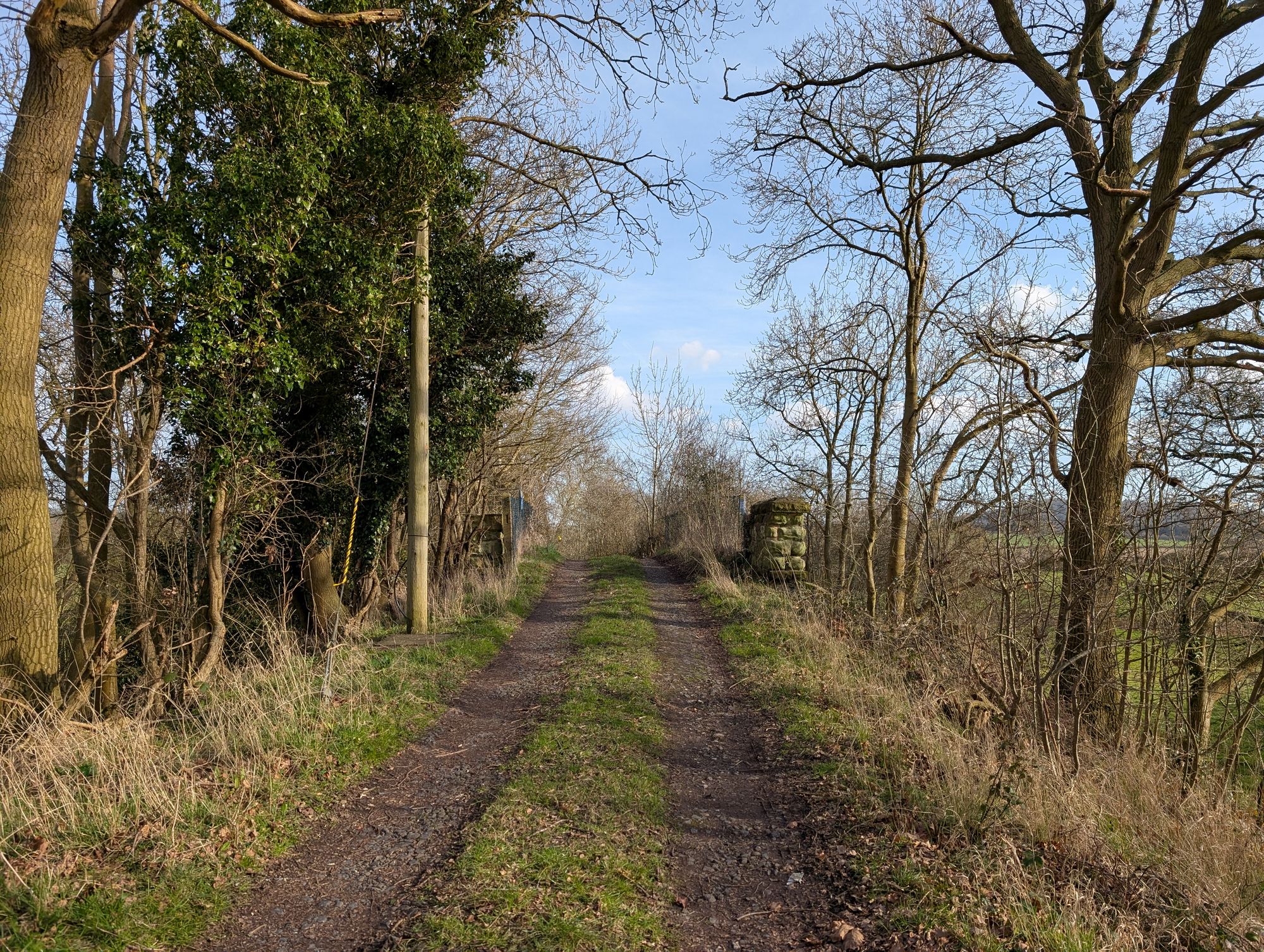
The road up to the bridge is a single lane track. You can see the sides of the bridge as you approach it. The ford itself is on the other side of the bridge.
The approach to the Ford Railway Bridge at Great AlneThe ford at the railway bridge at Great AlneFord Railway Bridge at Great Alne looking in the direction of Alcester
On ground level the bridge, its beams, stonework and abutments are clear to see. Trains would have steamed through here in both directions. The line is now overgrown, filled with what looks like items from fly-tipping.
The embankment of the Alcester Branch just past the ford overbridge at Great Alne
The walk continued onwards towards Aston Cantlow. You can see the side profile of the embankment in the picture above. It is flanked by fence posts and trees grown since its abandonment.
There is a brook between this field and the next. Guarded by two wooden stiles either side of two long planks over the brook. The Alne twists and turns here around a caravan park.
Following this footpath takes you onto the embankment of the line.
Gate leading onto the embankment of the Alcester Branch at Great Alne
Note: According to the book “Alcester Branch: ISBN: 1 905184 05 0”
“The line was carried over the Aston Brook by means of a twin-span girder bridge at 2 miles 15 1/4 chains”.
I didn’t see the bridge mentioned and can only assume the brook pictured above is said “Aston Brook”.
A GWR broad-guage “bridge” rail track repurposed as a fence post on the embankment of the Alcester Branch line at Great Alne
A small observation made as I walked on the outside of the embankment was this piece of track. I assumed, erroneously, that it was once used on the Alcester Branch and later re-used perhaps by a famer. I have since learned that it was common for GWR to re-purpose rail tracks for fence posts. The track pictured above is a broad-guage “bridge” rail track and likely dates to the creation of the train line.
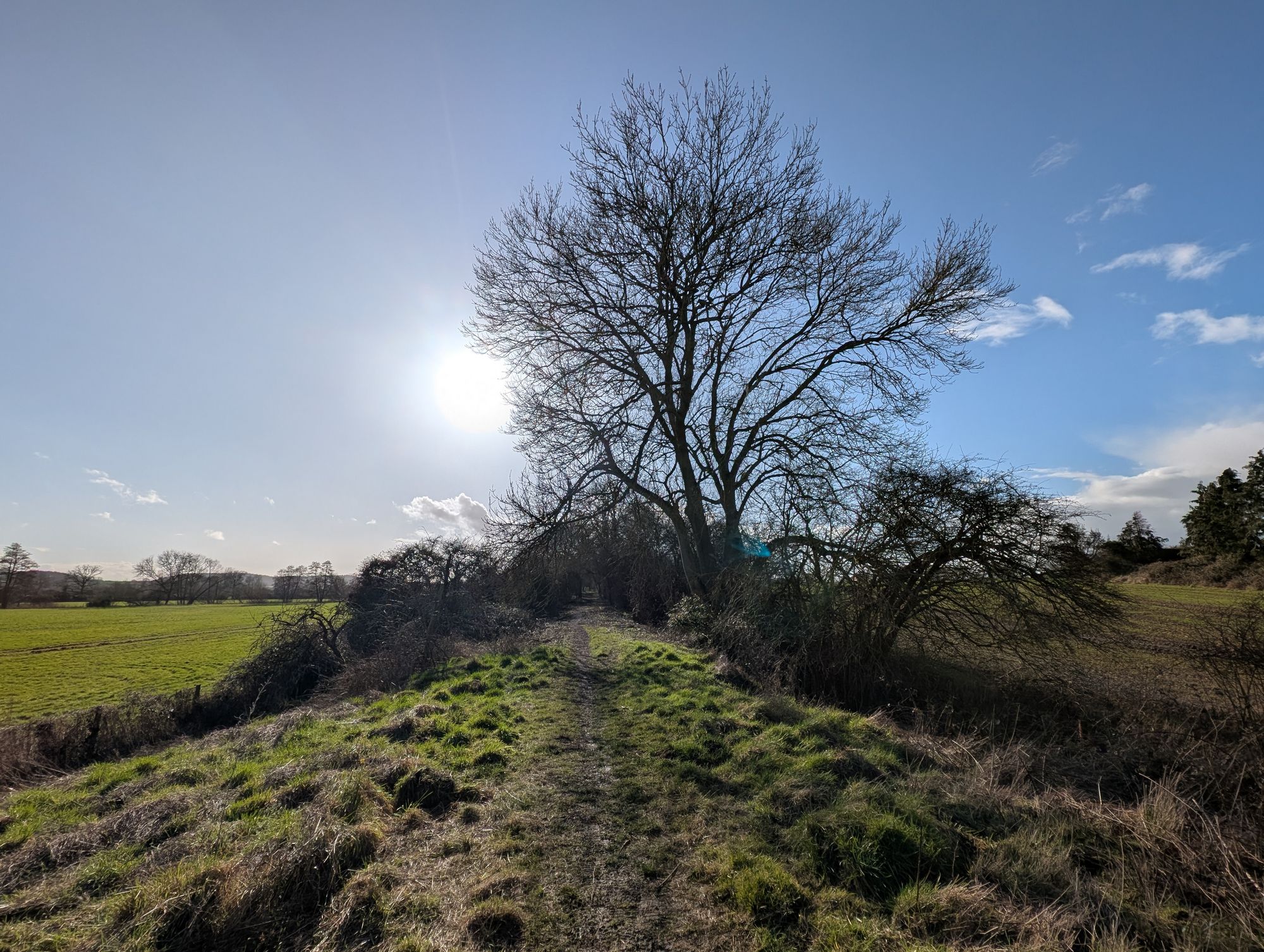
The embankment of the Alcester Branch at Great Alne looking in the direction of Bearley
The embankment today is overgrown with trees.
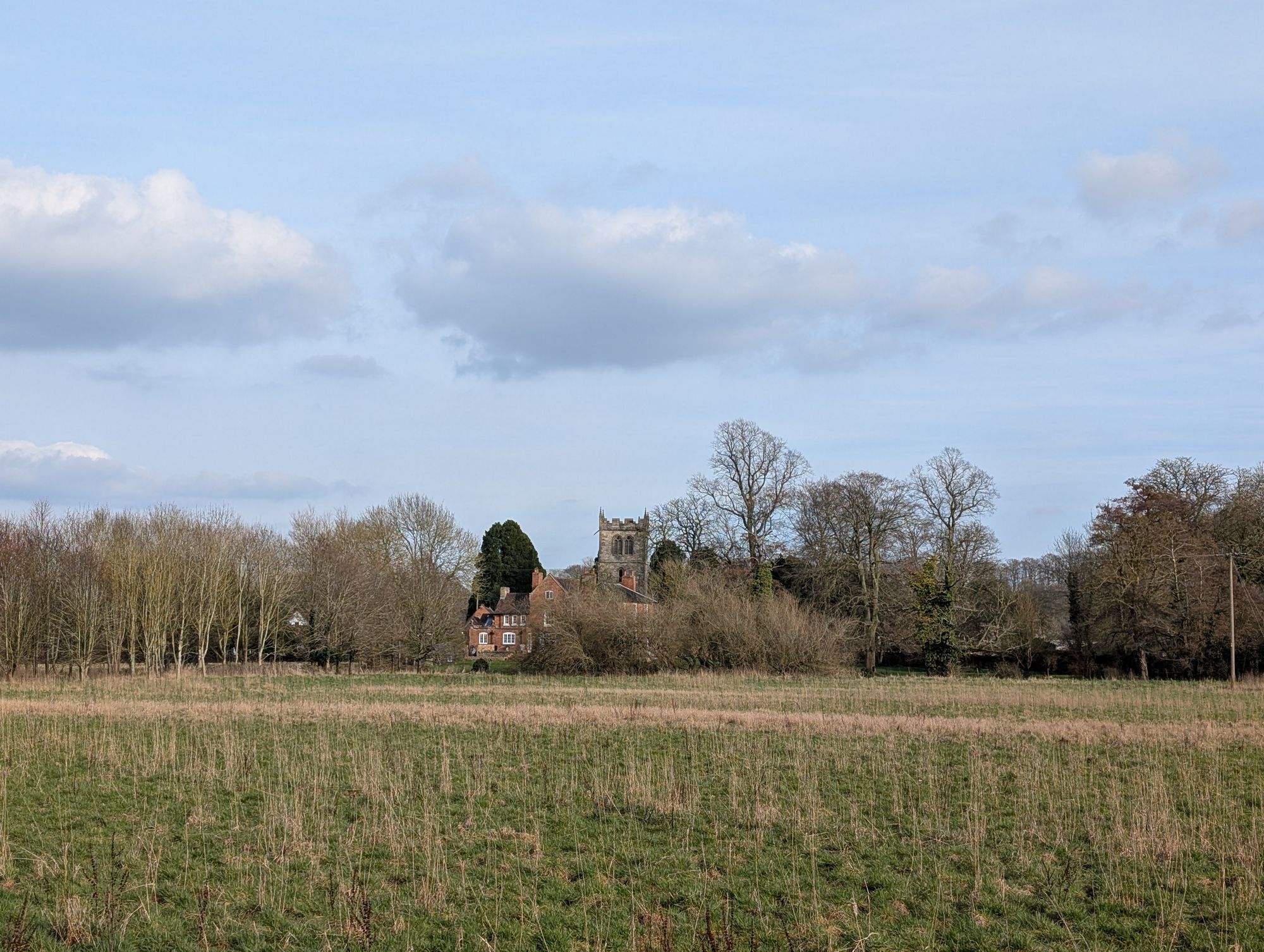
The Alne hills from the Alcester Branch embankment at Great AlneAston Cantlow from the embankment at Great Alne
The Alne hills and Aston Cantlow providing a scenic view looking out from the embankment. This is the scenery passengers would have enjoyed on their journey’s.
River Alne bridge from the south bank, facing the direction of Bearley
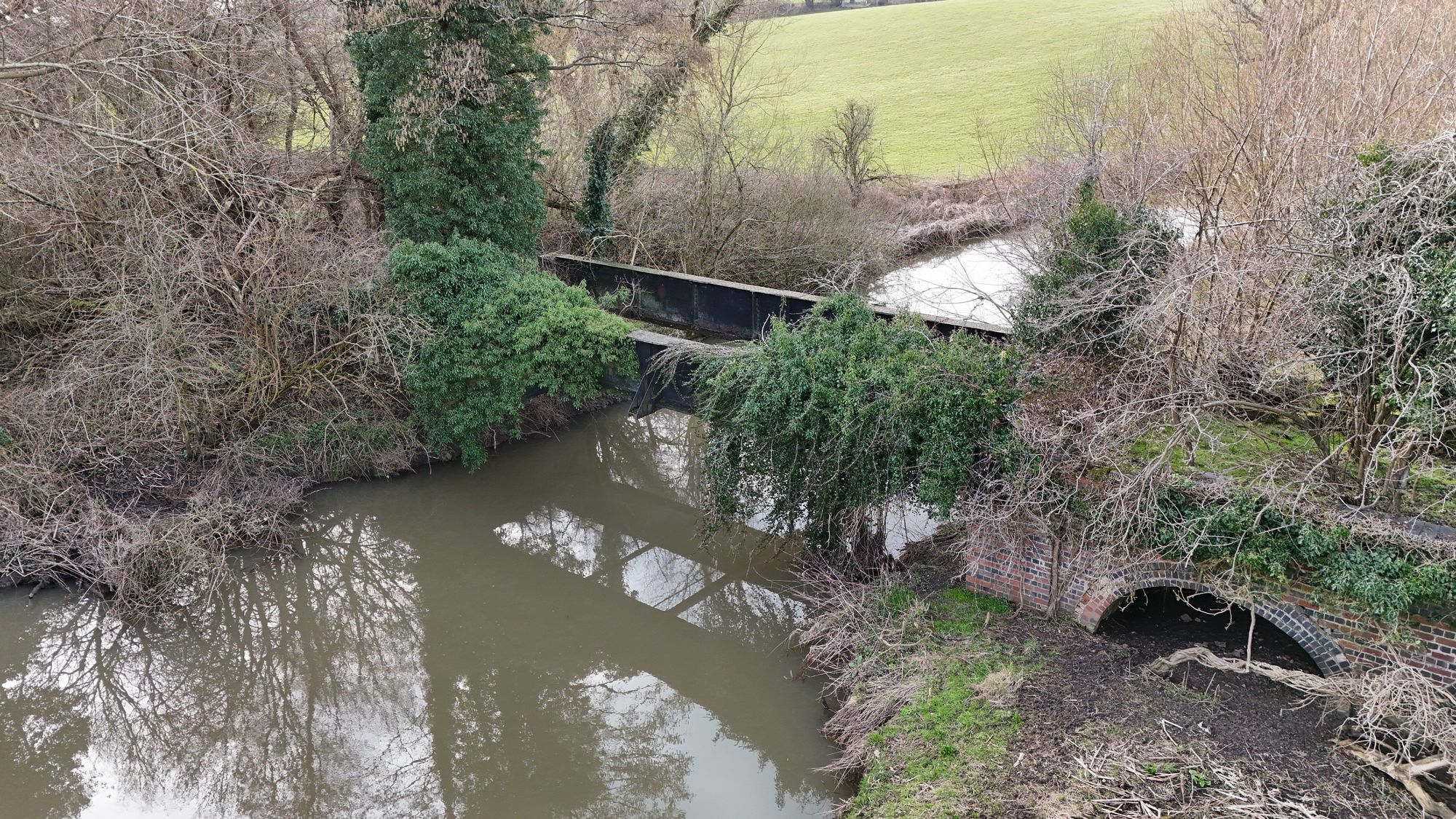
Following the track to the river was a difficult task as we navigated through the overgrowth. The river bridge came into view, a 43ft long steel girder bridge supported by brick piers. You will notice the three flood arches on the north bank.
River Alne bridge at Aston Cantlow surveyed in 1885 (Reproduced with the permission of the National Library of Scotland)
According to the Alcester Branch book:
“The structure was severely damaged by flooding in January 1901 when the Rivers Alne and Arrow burst their banks. The main bridge girders were washed away and deposited in the river alongside the abutments, whilst the brickwork in the flood arches was badly cracked. The bridge was rebuilt with new girders and to this day the original ones lie in the bed of the river where they fell..
The structure underwent further extensive repairs in 1926 when the bridge was redecked with 9in timbers and additional stiffness, gussets etc.”
The original bridge is sitting at the bottom of the Alne somewhere.
River Alne bridge facing Aston CantlowRiver Alne bridge from aboveRiver Alne bridge in the direction of Great Alne
From the bridge we then doubled-backed on ourselves and followed the path towards the caravan park. There is a small foot-crossing here.
From the caravan park we followed the path towards the Church and then to the pub for a well-deserved refreshment.
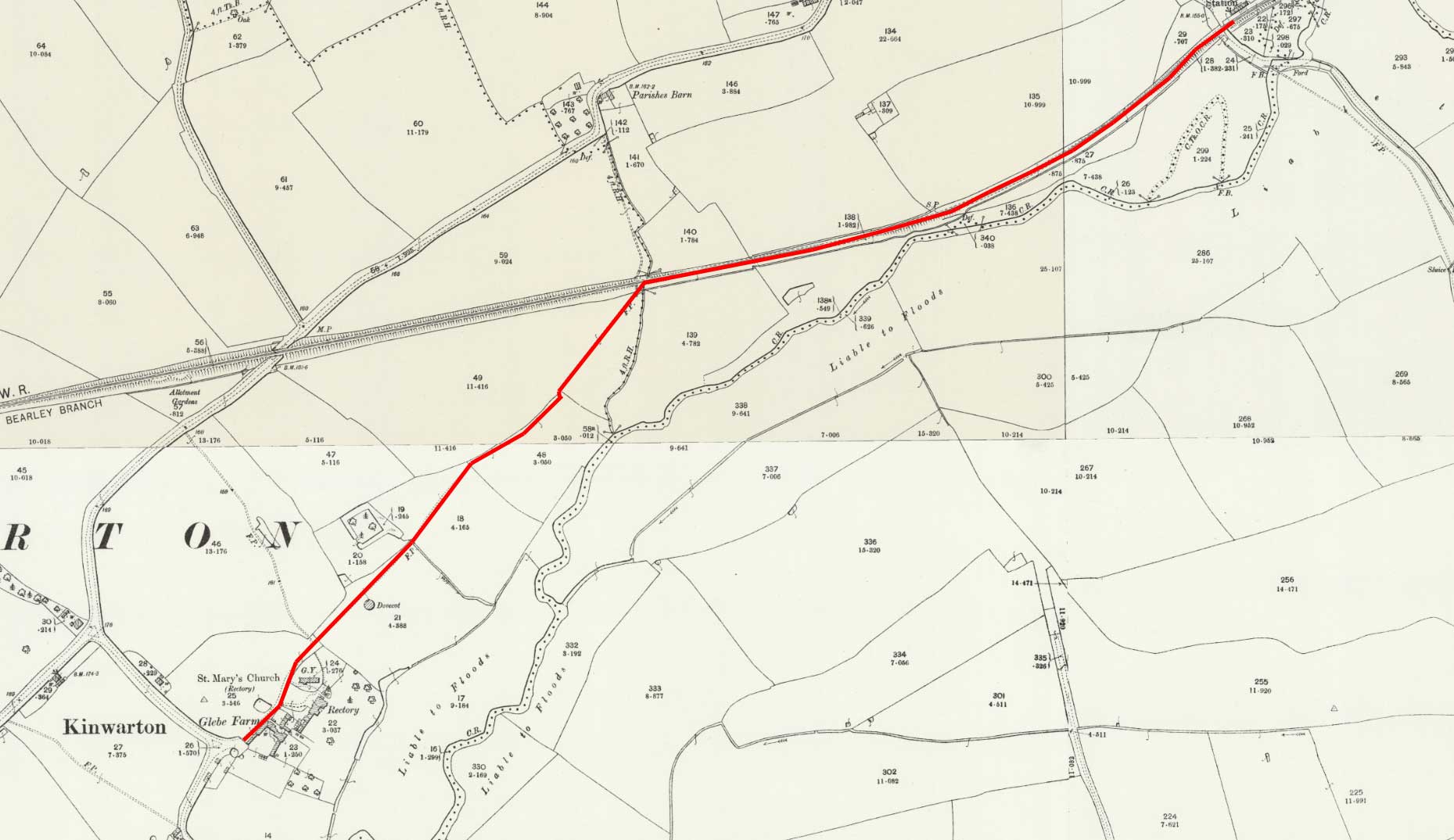
With my recent interest in the Alcester Branch railway I thought it would be good to see more of the line for myself, especially after reading the brilliantly informative book, The Alcester Branch (ISBN: 1905184050). Using maps from the book, I traced the line on recent satellite imagery using public footpaths where possible. And it turns out there is a public route from Kinwarton to Great Alne.
Alcester Branch Walk – Kinwarton to Great Alne
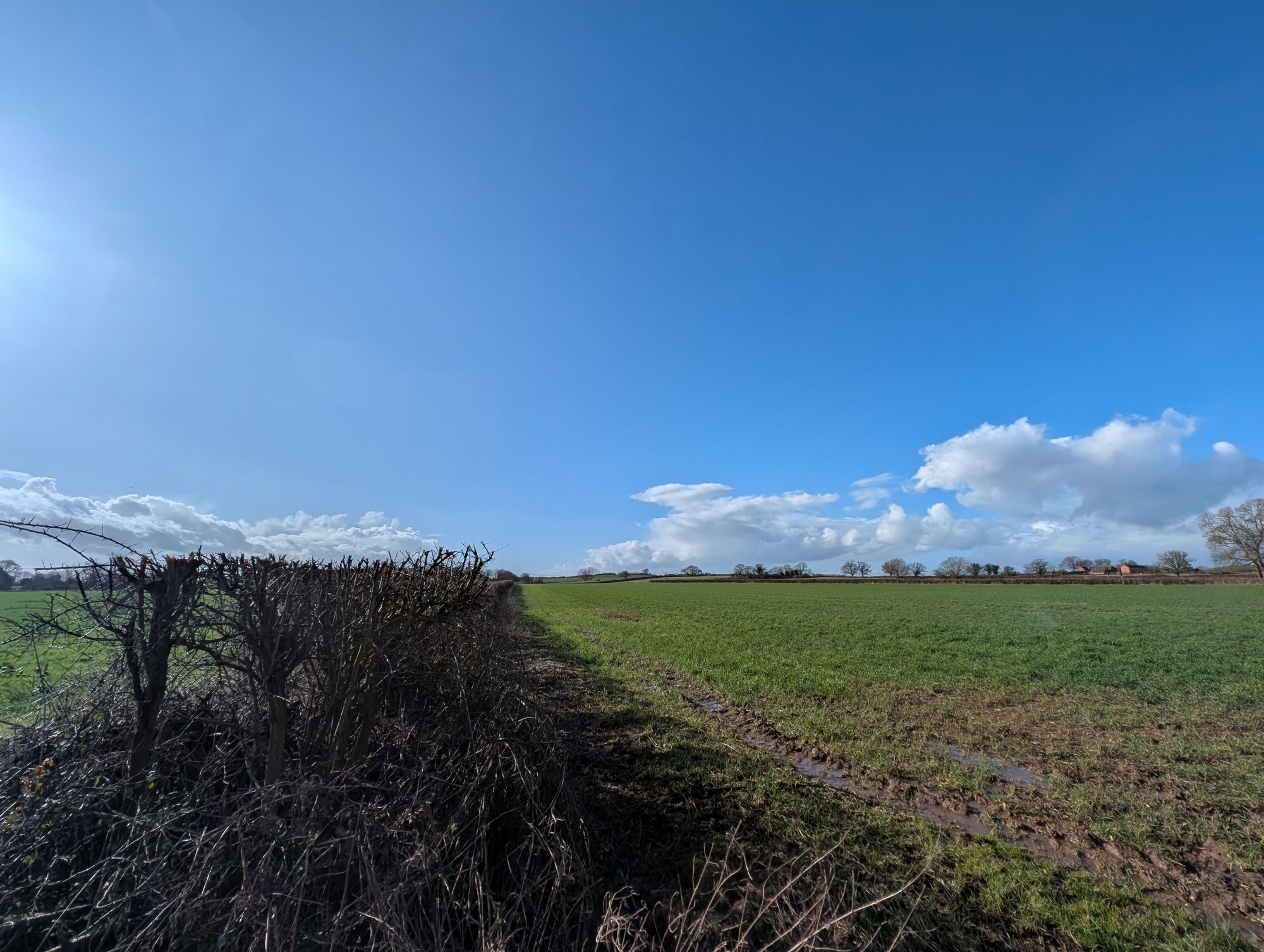
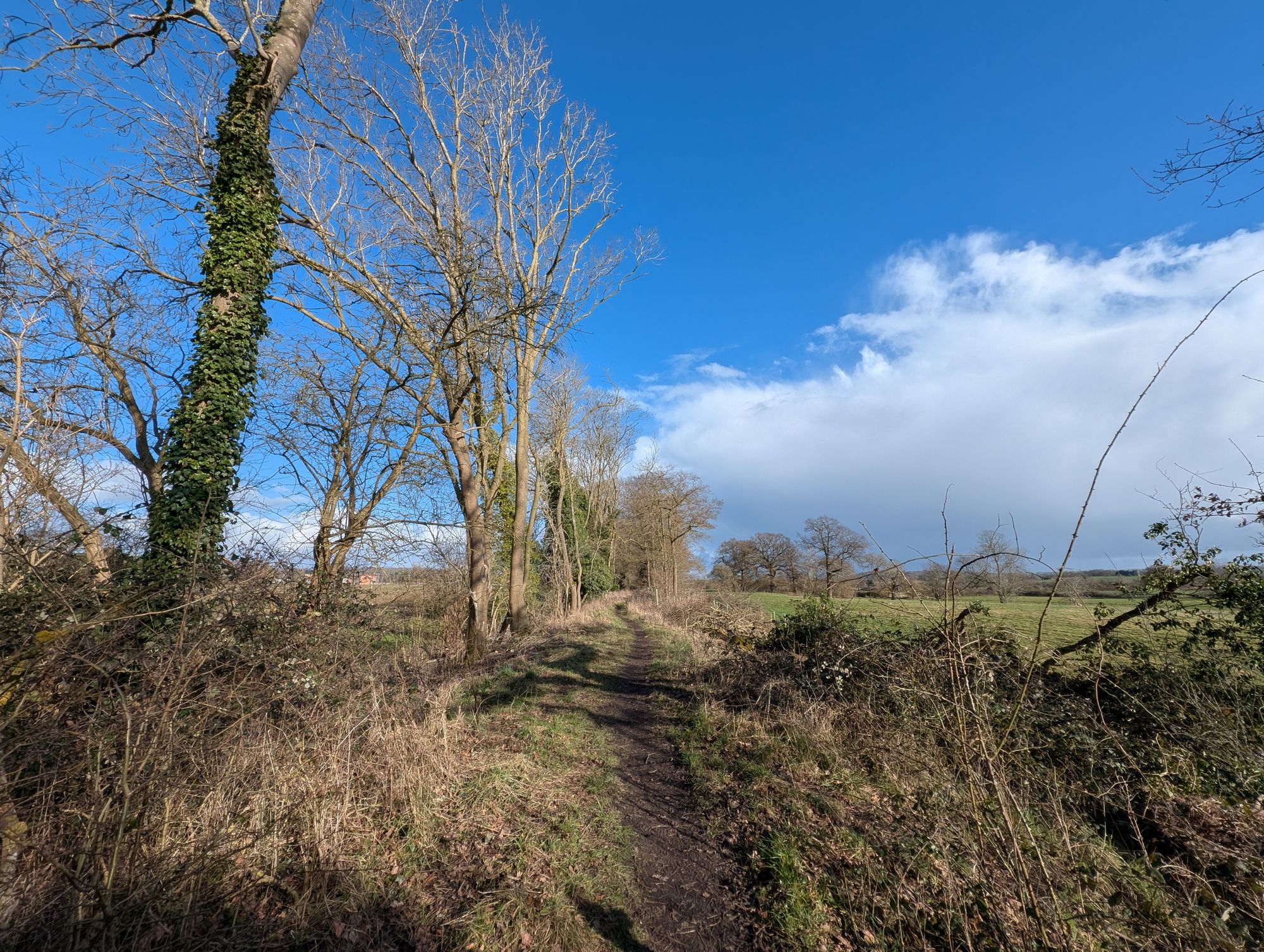
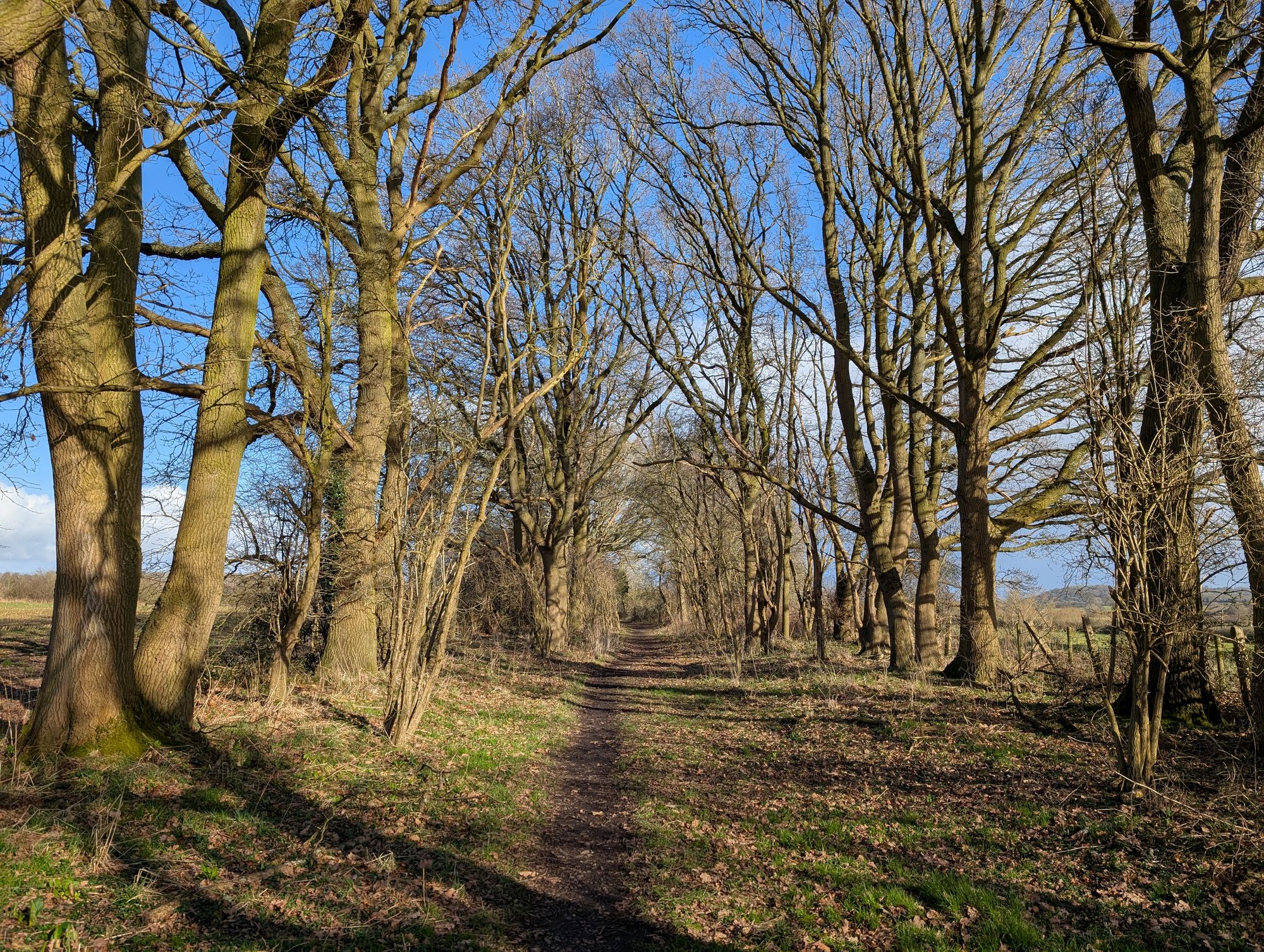
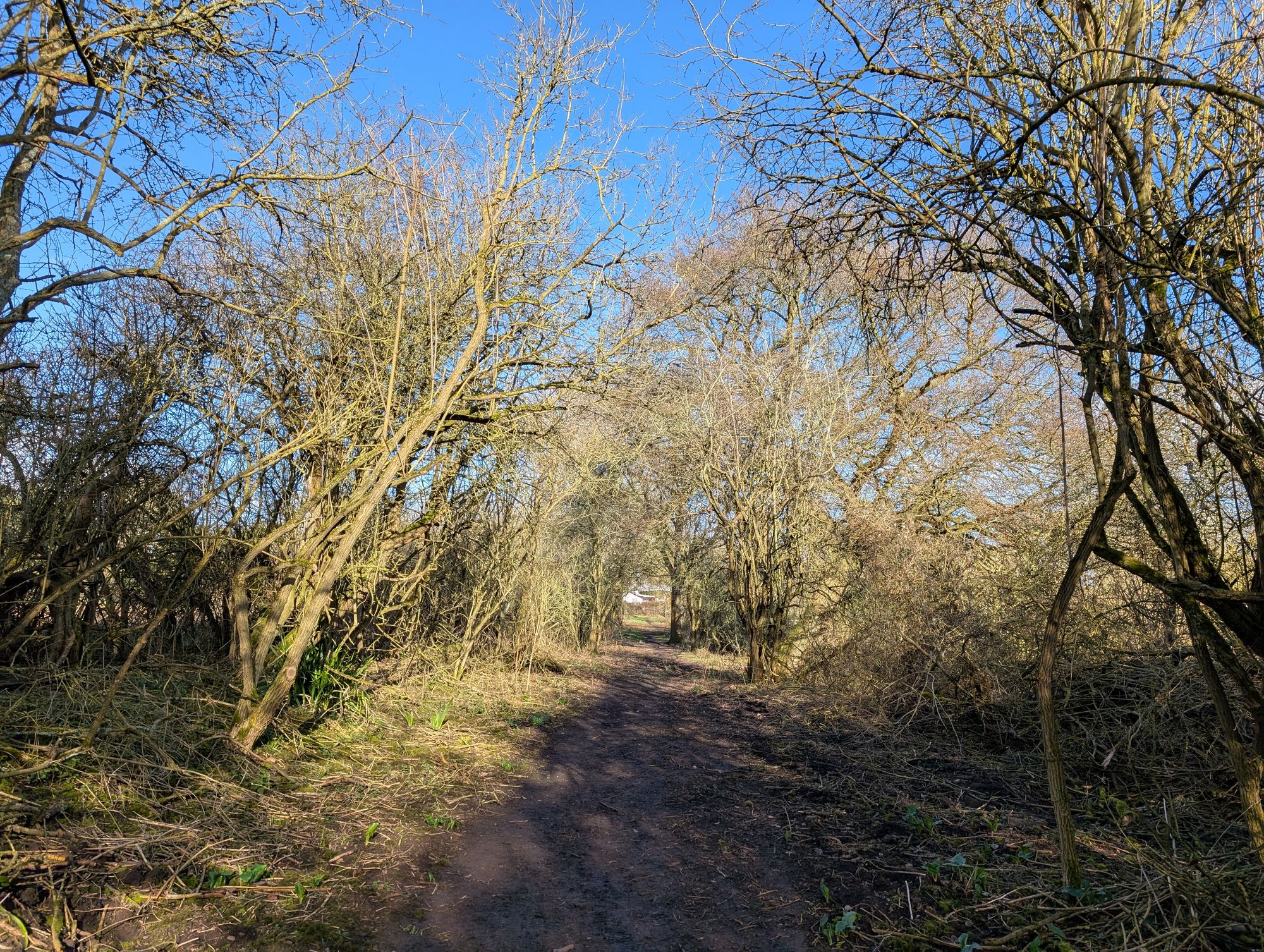
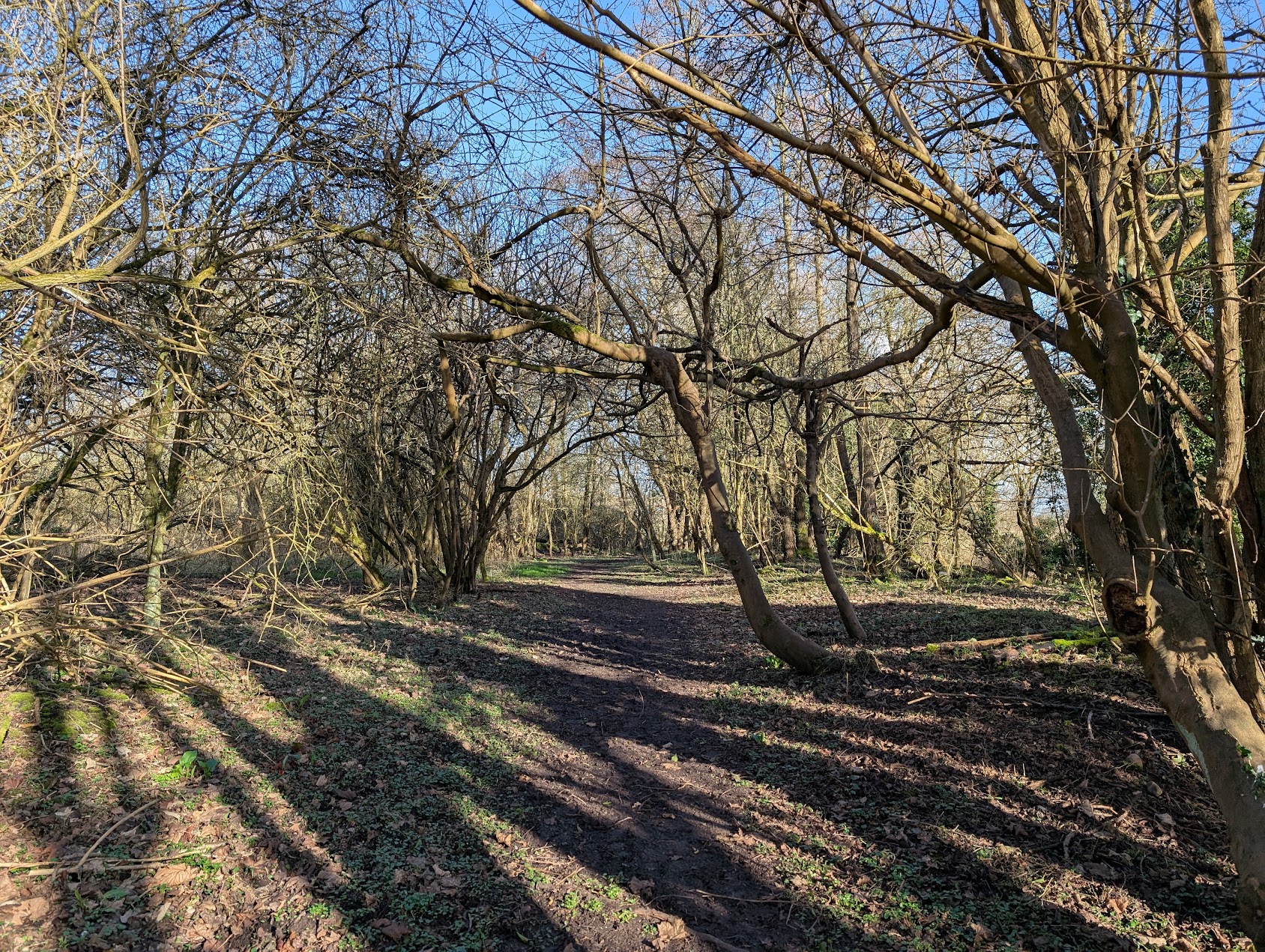
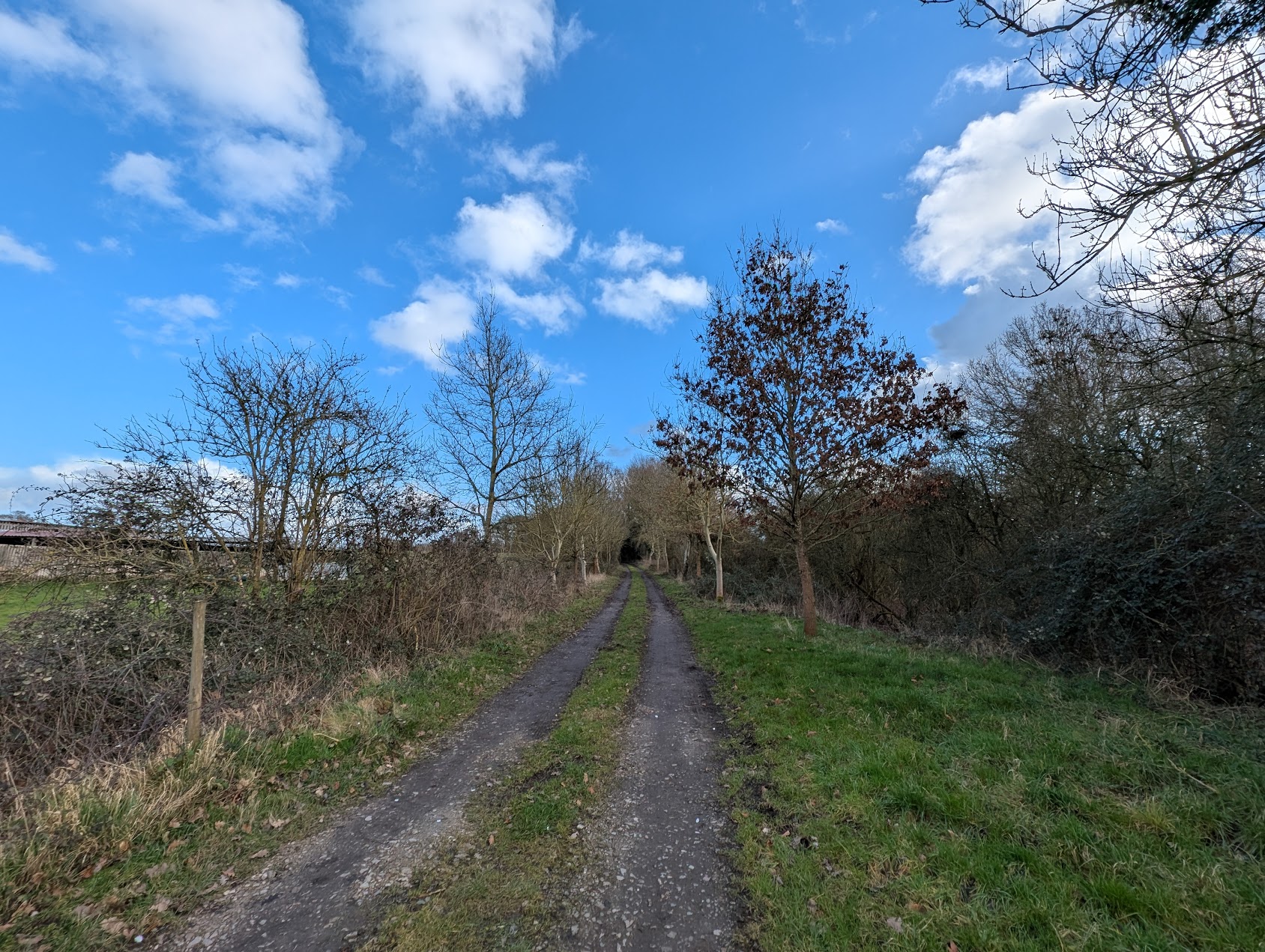
The walk starts at Kinwarton heading north east past the Old Rectory and Church. The path then goes through the Dovecote field and then another field which is divided by a hedgerow. This hedgerow follows the route of the old line towards what is now a walking trail in a woodland nature reserve. This section of the route is on the embankment, built for the rail line and at certain places is only metres away from the Alne river which curves towards the track and out again.
Alcester Branch Railway looking west towards Alcester from KinwartonAlcester Branch Railway looking east towards Great AlneAlcester Branch Railway on the walking trail looking east towards Great Alne
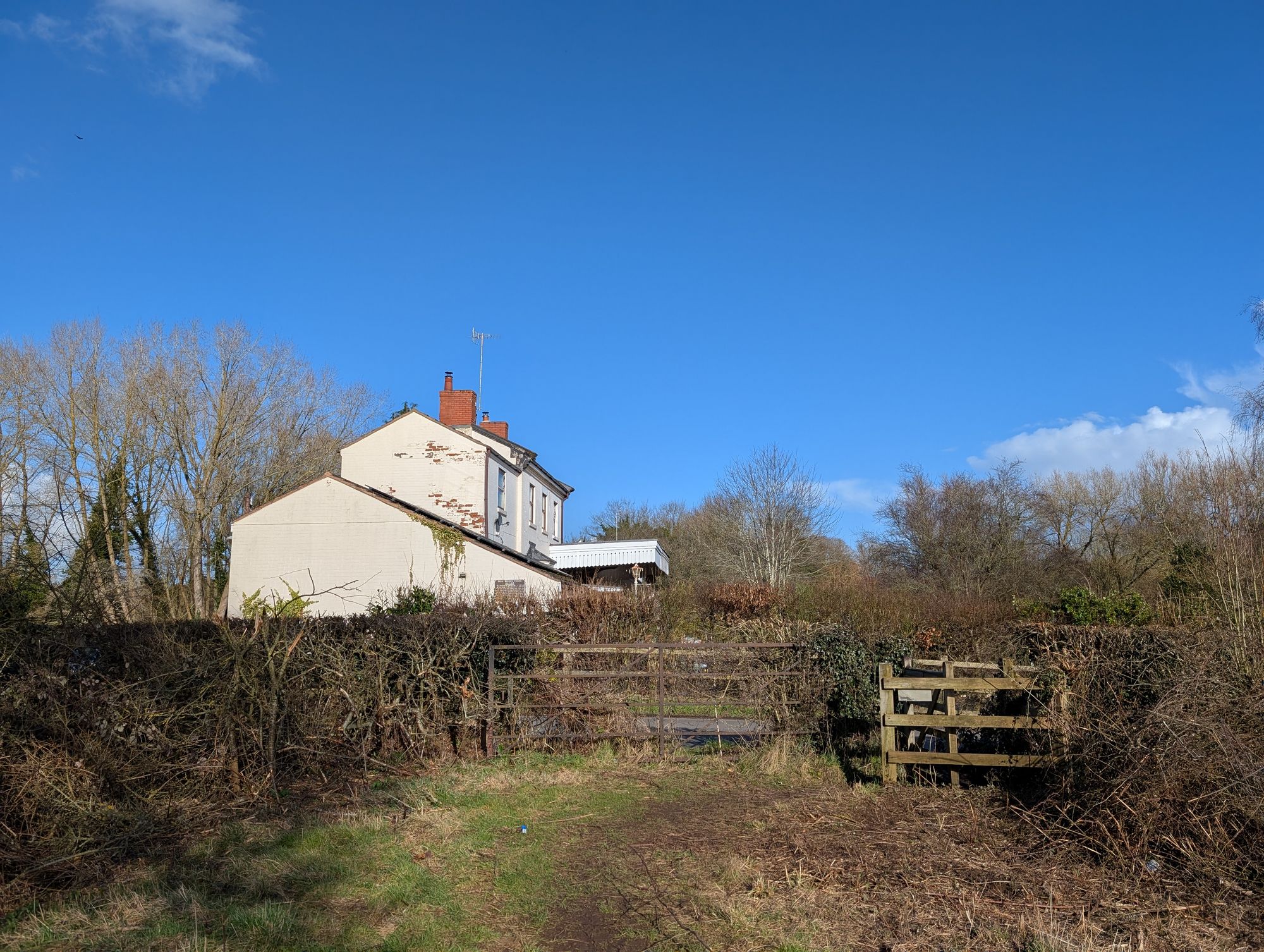
The walking trail continues for about 700 metres before reaching Pelham Lane and what was the old Station house at Great Alne (now a residential house called Station House).
Alcester Branch walk towards Pelham LaneStation House from the Alcester Branch walking trailLooking back at the Alcester Branch walking trail from Pelham LaneAlcester Branch Walk – Great Alne to Spencer’s Mill
Across the road at Pelham Lane is a woodland conservation area called Coffee Pot Wood. Appropriately named after the nickname for the train that used to roll though here all those years ago. The path takes you through a woodland trail of sorts but only follows the line for a short period before turning off on the Henley Road.
Station House from Coffee Pot WoodWalking through Coffee Pot Wood
Some parts of this section of the line now run through private farms so I walked on the Henley Road towards Mill Lane.
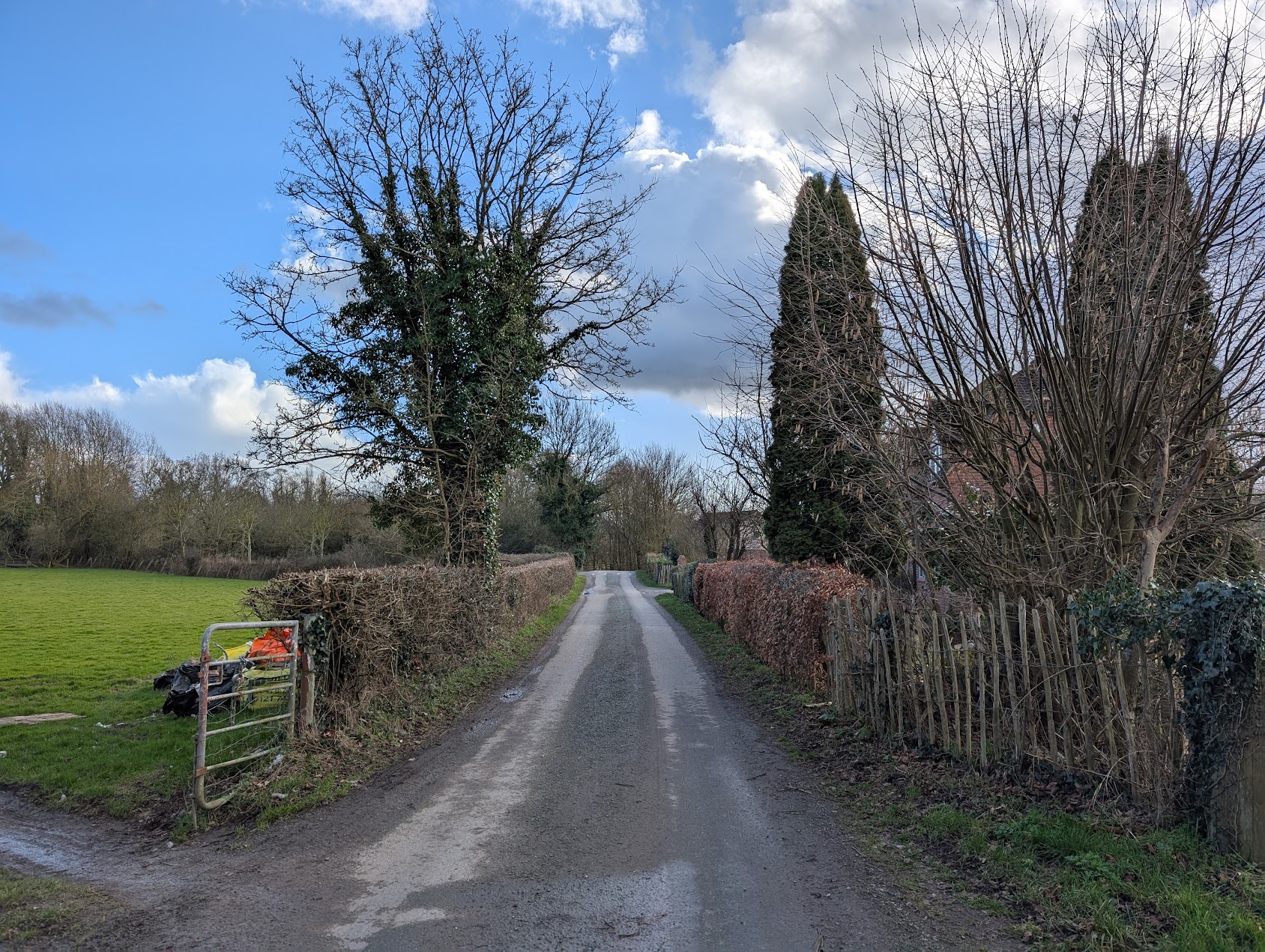
Walking down Mill Lane, Great Alne
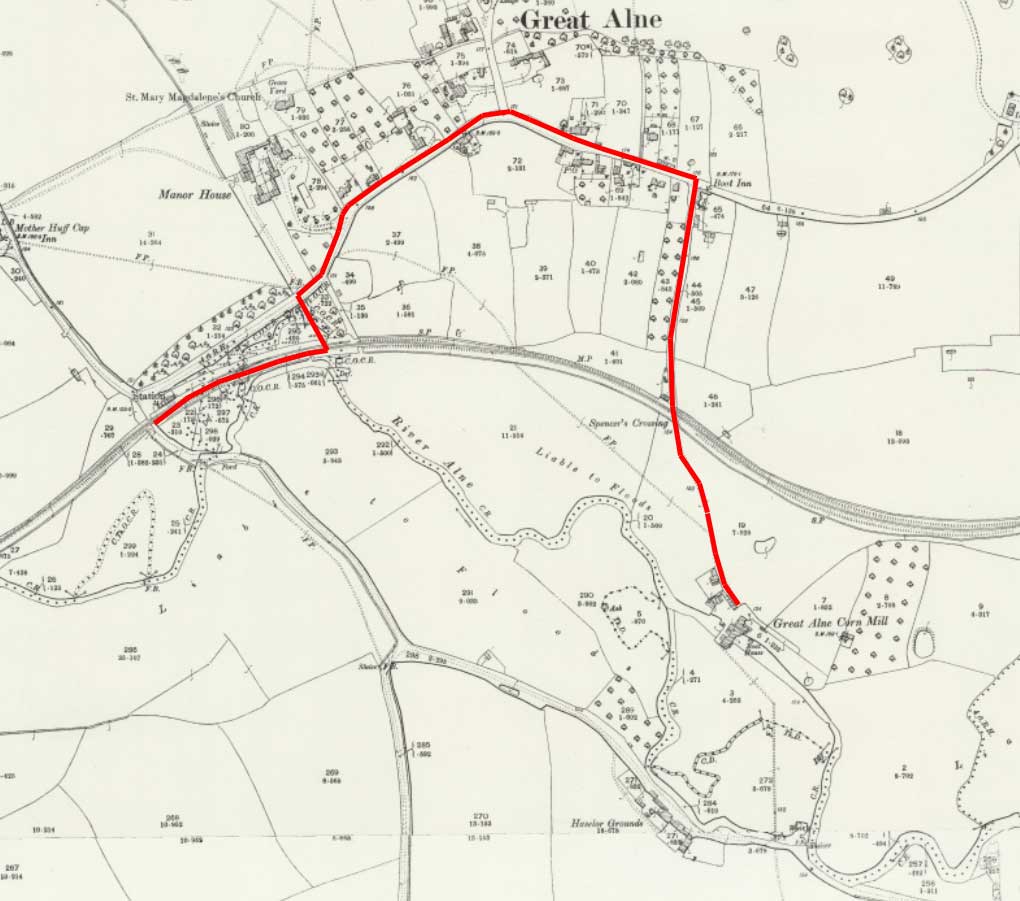
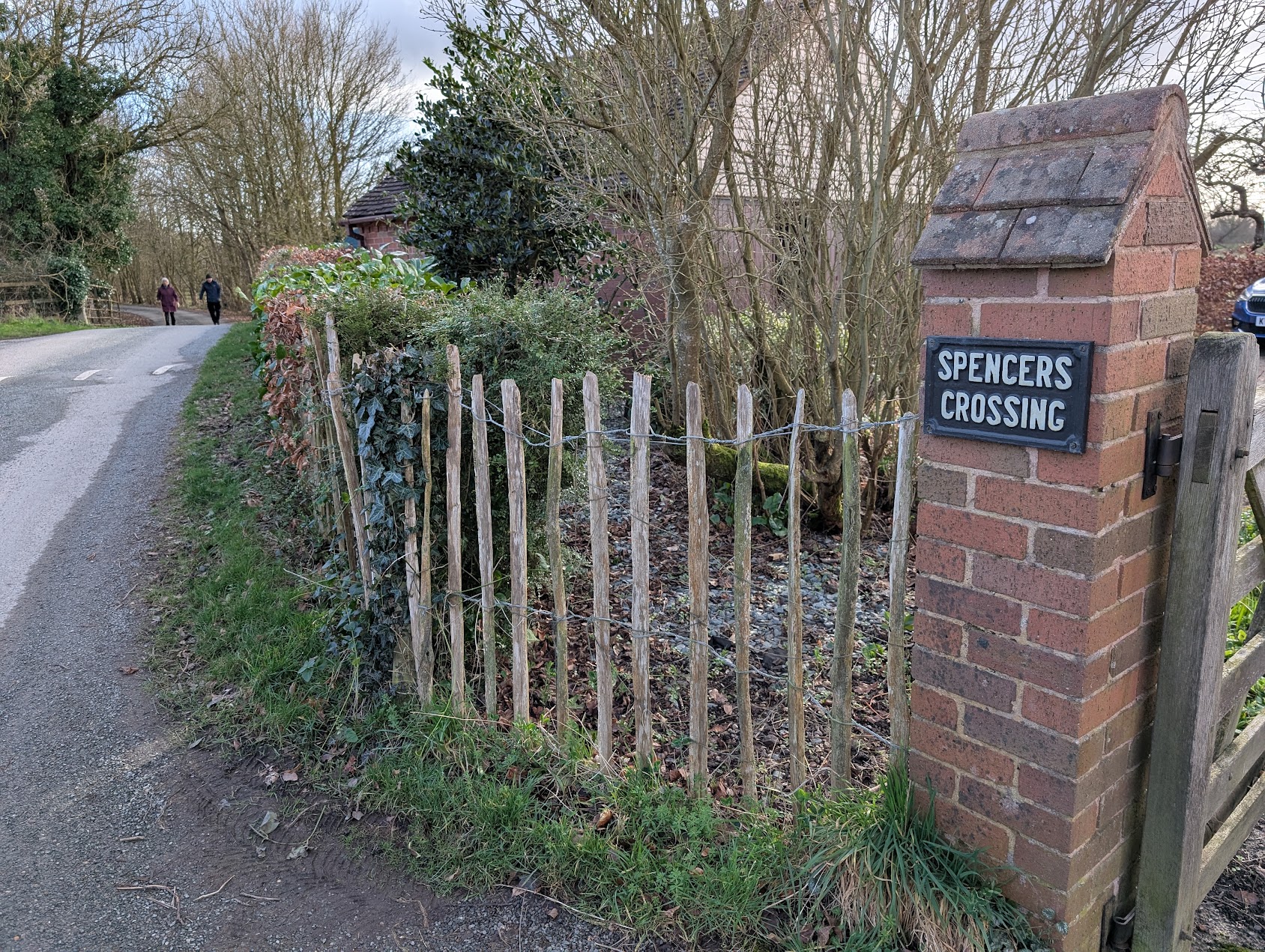
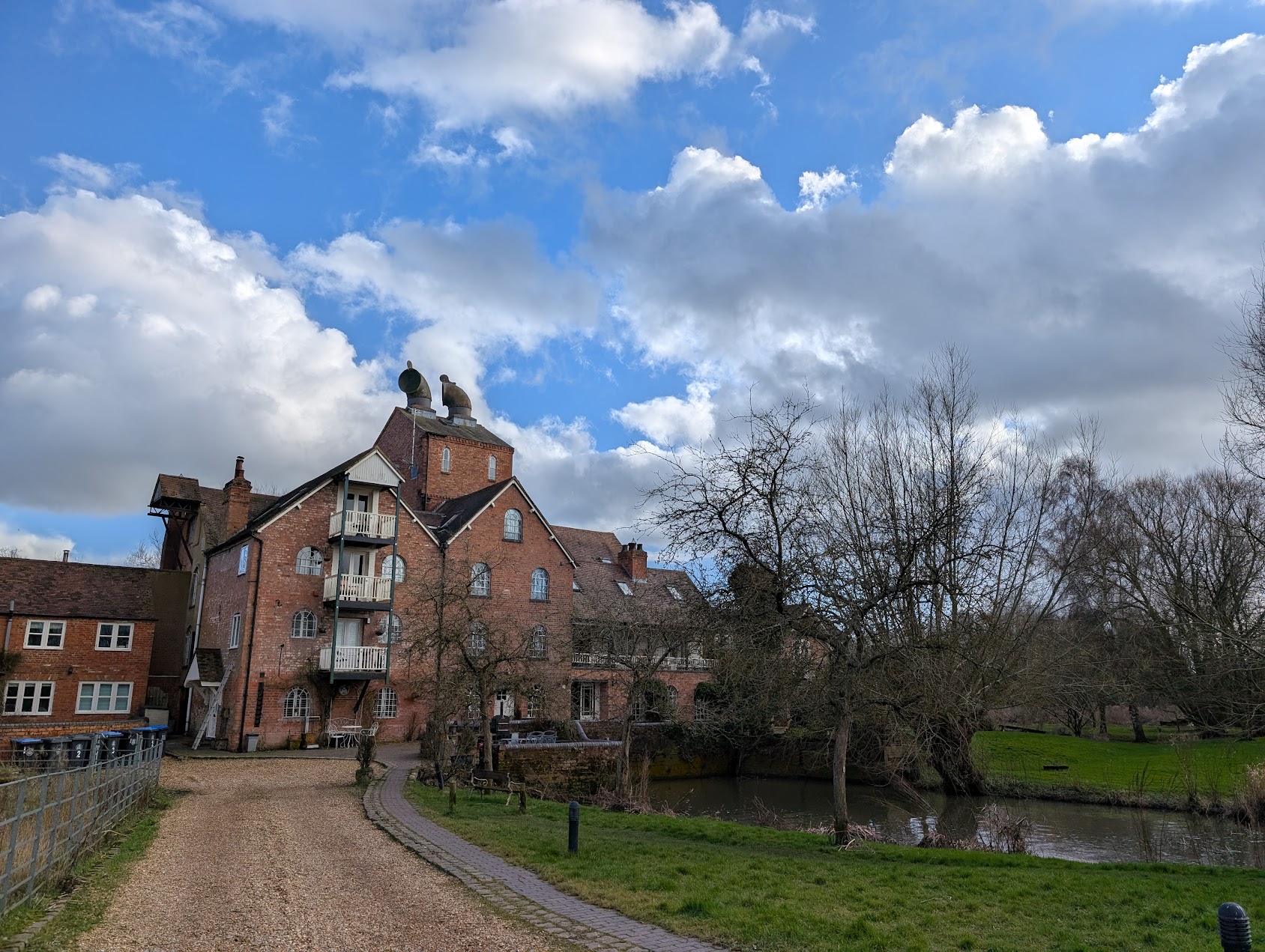
The contour of the line reveals itself once again at Spencer’s Crossing. It runs through private fields on either side so it’s not possible to walk the line here. Further down Mill Lane is of course the old Mill which no longer operates as a mill. It was once run by the Spencer family which is where the name Spencer comes in for the crossing.
Spencer’s Crossing, Great AlneAlcester Branch Line at Spencer’s CrossingGreat Alne Mill
This was a good walk. Though I would mention that the fields at Kinwarton can be quite muddy in the colder months so wearing the right footwear is essential.
There was once a railway line that ran from from Bearley to Alcester. The line opened in 1876 and connected Alcester into the Great Western Railway network. Trains ran from Bearley, winding their way through the Warwickshire countryside through the villages of Aston Cantlow, Great Alne and Kinwarton before ending up at the Alcester.
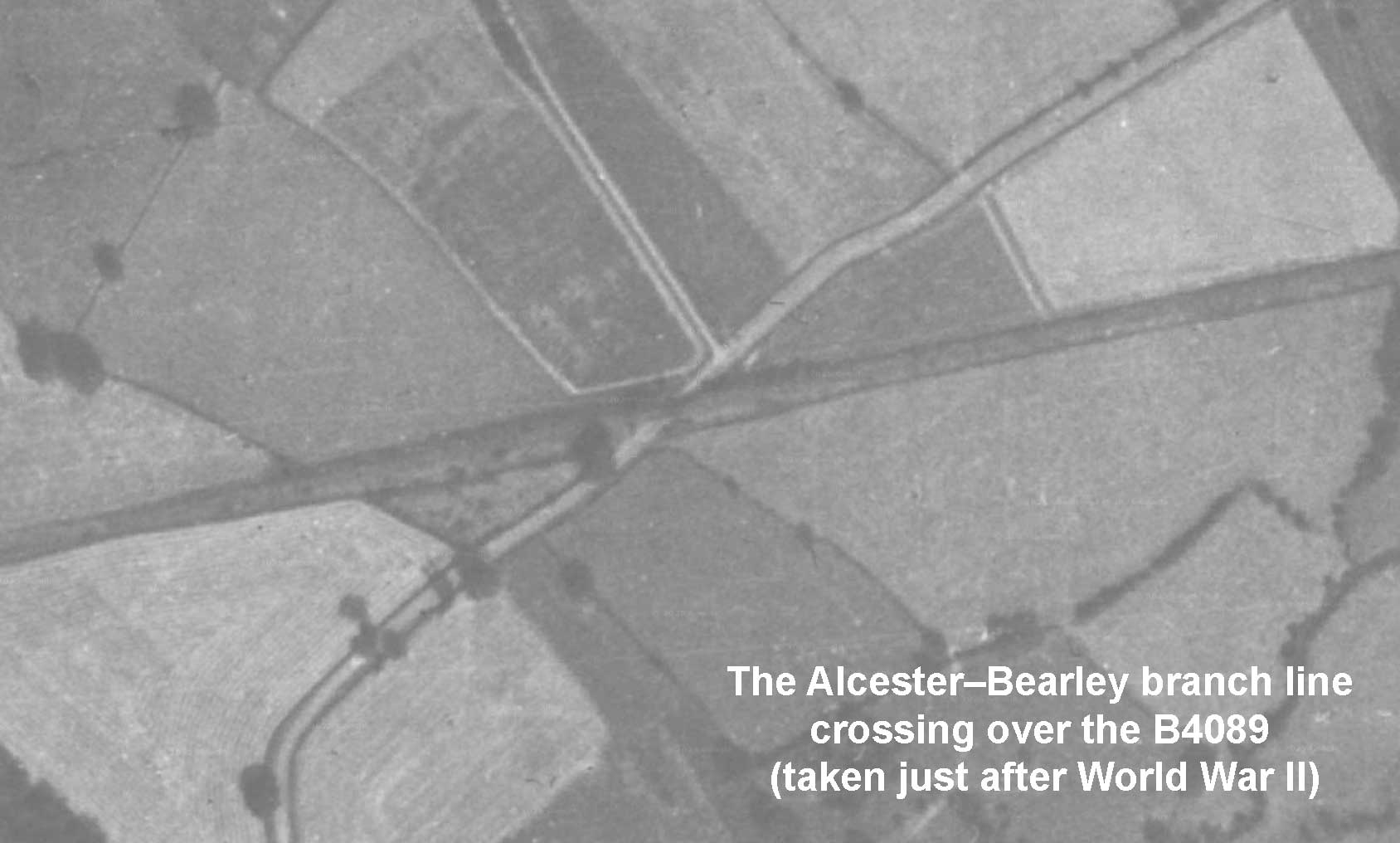
Constructing a railway line provides challenges – the navigation through existing infrastructure – buildings, rivers and in the case of the Alcester Branch public roads. One of the roads in question was the B4089. This road ran connected Alcester to Wooten Wawen and would intersect with the line at Kinwarton, close to the Coughton Fields Lane junction. To overcome this problem an underbridge was built which you can see in the aerial photograph below.
Aerial photograph of the Alcester-Bearley Branch Line crossing over the B4089 taken just after the end of the warPhotograph of Alcester to Bearley railway line, railway bridge at Kinwarton, from the road
Taken by Richard King in 1960
Fast forward to 1960 and the bridge is still standing despite the line being inactive for almost a decade. The photograph above (taken near the Coughton Fields Lane junction, in the direction of Alcester) reveals that this was a “skewed iron girder” bridge. Notice the red and blue brick pattern, similar to that used on the three-arched bridge over the deep cut over Gerrards Bank.
Red and Blue English bond brickwork on Gerrards Bank bridge
At this point the line was likely owned by the British Transport Commission as by February 1961 the land from the bridge over Gerrards Bank up to the B4089 was transferred from them to Alcester Estates. A small piece in the Tewkesbury Register & Gazette from the following month confirms the removal of the bridge.
Newspaper clipping describing the removal of the Kinwarton Railway Bridge in 1961
Tewkesbury Register & Gazette. 17/3/61.Alcester-Bearley Branch Line Imprinted on the landscape today
Google Maps
It is easy to see the imprint of the line on the landscape some 70 years after it was last used. A lasting reminder of this fascinating piece of local history.